What this part really tests
The examiner shows you two photos on a shared theme and asks you to compare them, then answer a short question about them — roughly a minute of uninterrupted speech. This is the part of the test where Discourse Management does the most work: can you organize, extend, and sustain a turn on your own, with no back-and-forth to lean on.
The examiner's method
- Don't describe each photo separately — actively compare them ("Both photos show…, but…").
- Speculate on feelings, reasons, and context, not just what's visible ("I imagine she feels…", "They might be doing this because…").
- Use signposting language to organize your turn: firstly, in the first photo, moving to the second, overall.
- Keep track of time so you reach the specific follow-up question at the end — don't run the clock out mid-description.
Language for comparing and speculating
Traps that cost marks
Worked example
Picture two photos on the theme "trying something for the first time": Photo A shows a teenager in a kitchen, carefully measuring flour with a recipe book open beside them. Photo B shows an older man at a table, looking at a phone screen while a younger person points something out on it.
Weak: "In the first photo there is a boy. He is cooking. There is flour and a book. In the second photo there is a man. He has a phone. A woman is next to him." (Stops after about 20 seconds — two lists, no comparison, no speculation.)
Strong: "Both photos show someone trying something new, but at very different stages of life. In the first, the teenager looks really focused, maybe a little nervous, like it's their first time following a recipe alone. The second photo is almost the reverse situation — here it's an older person learning something new from someone younger, which I imagine takes a certain amount of patience, and maybe some humility too. What they both have in common, though, is that neither person looks totally confident yet."
- The strong answer opens by naming the shared theme immediately, then flags a contrast ("at very different stages of life") — that's genuine comparison, not two lists.
- It speculates twice ("maybe a little nervous", "I imagine takes... patience") instead of only describing what's visible.
- It closes by returning to a similarity, which naturally fills time and demonstrates real comparative thinking rather than running out of content.
- The weak answer never uses a single comparing or speculating phrase — it is two separate, static descriptions, and it stops well before a full minute.
Spot the weakness
Each clip is a real long-turn answer on a photo theme described in the transcript. Listen, then decide which of the four criteria is the answer's biggest problem.
Timed practice
This isn't machine-scored. Speak for the full minute without stopping, comparing the two photos below and finishing with the follow-up question. Then self-check your own performance and compare it with a strong and a weak model answer.
Compare these two photos of people trying something new for the first time. Say what you think each person is feeling, then answer the question below.
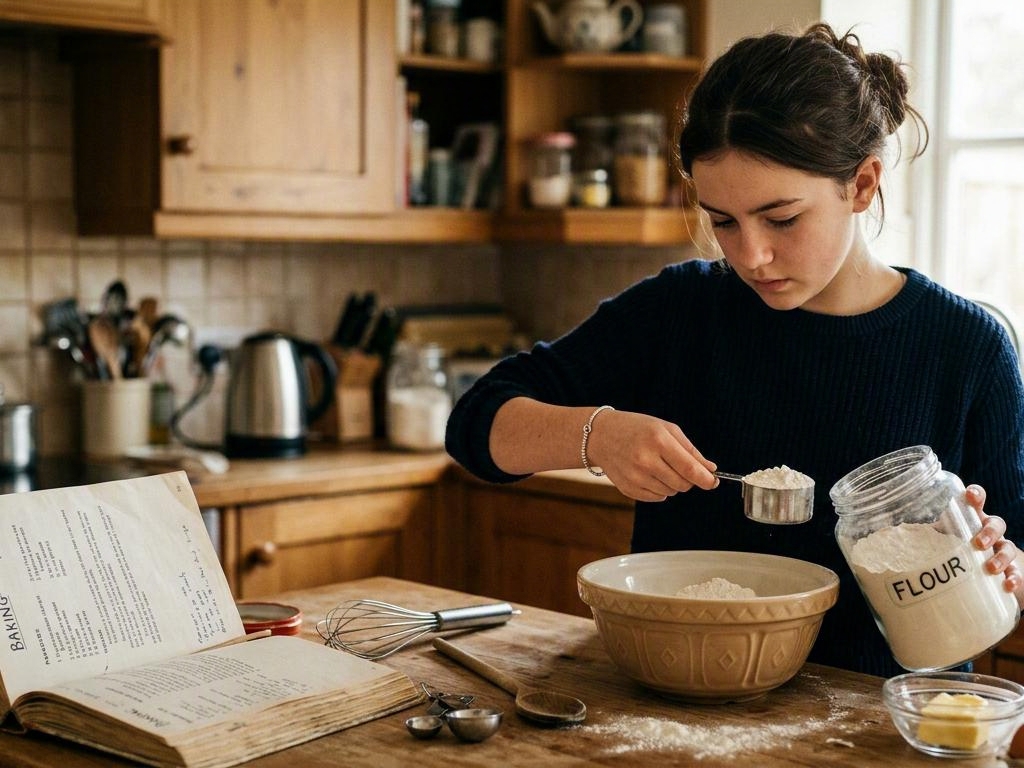
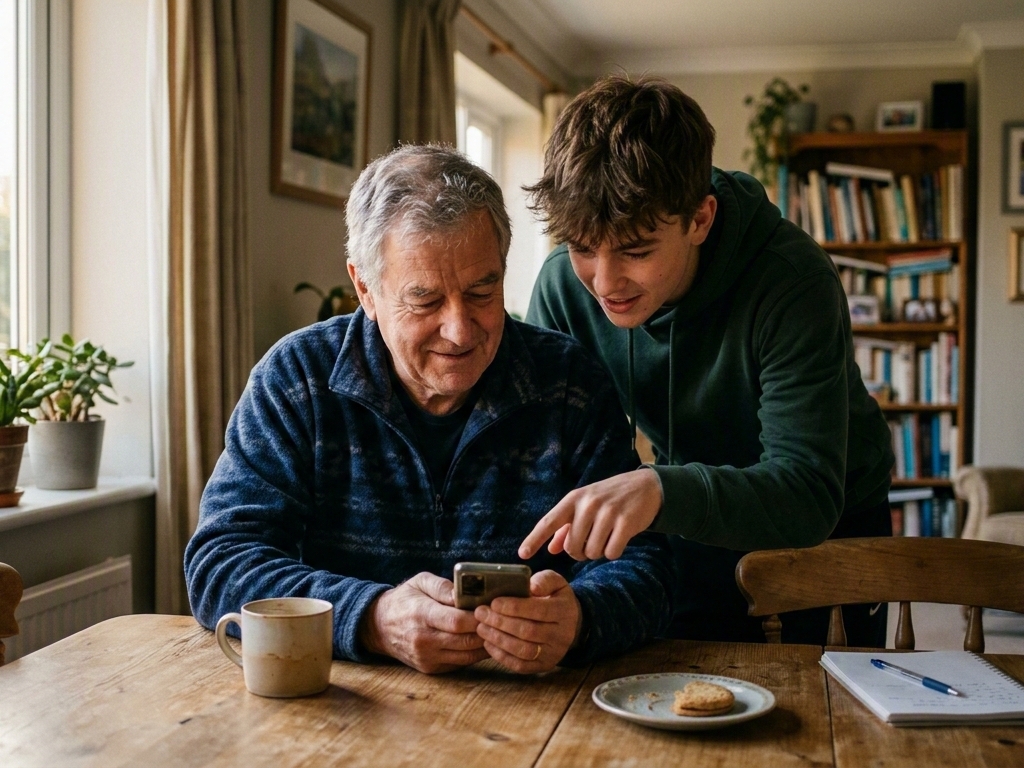
Which do you think is harder to learn as an adult — a practical skill, or how to use new technology?
Complete the timed practice above to unlock the self-check and model answers.
Self-check
This self-check is a reflection tool, not a score. Speaking is assessed by a person against these four criteria across the whole test, not per answer.
Model answers
Both photos show someone trying something new, but at very different stages of life. In the first, the teenager looks really focused, maybe a little nervous, like it's their first time following a recipe completely alone. The second photo feels almost like the reverse situation — here it's an older person learning something new from someone younger, which I imagine takes real patience, and maybe a bit of humility too, since it's not always easy to be the one being taught for once. What they both have in common, though, is that neither person looks fully confident yet. As for which is harder — I'd actually say technology, because a recipe eventually just becomes memory, but technology keeps changing, so you're never quite finished learning it.
In the first photo there is a boy. He is cooking. There is flour and a book on the table. He looks careful. In the second photo there is a man. He has a phone. A person is next to him and is showing him something. That's all.